VISUAL ESSAY / POLICIES

License Plate Rationing

FILM INDEX / JUMP TO AN ACT
FIELD GUIDE

When Restrictions Invite Detours

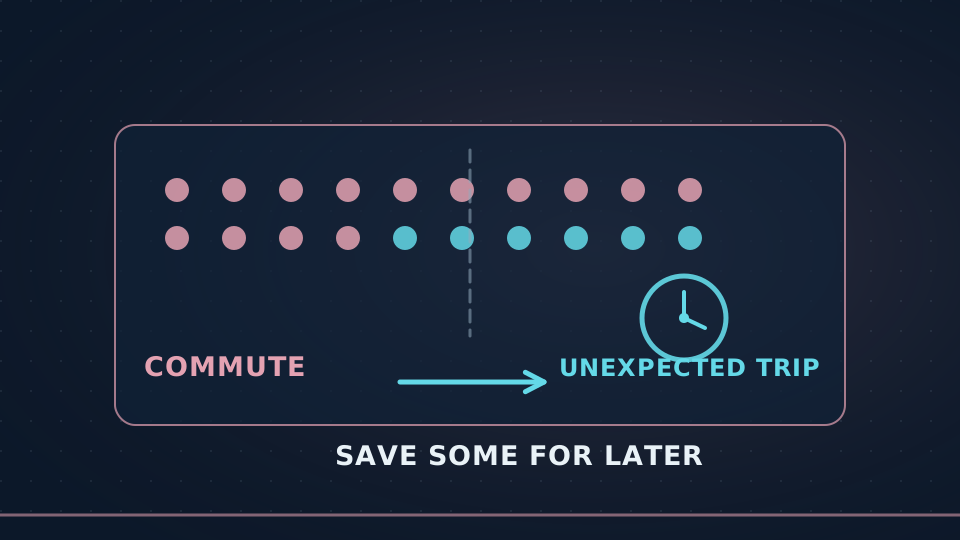
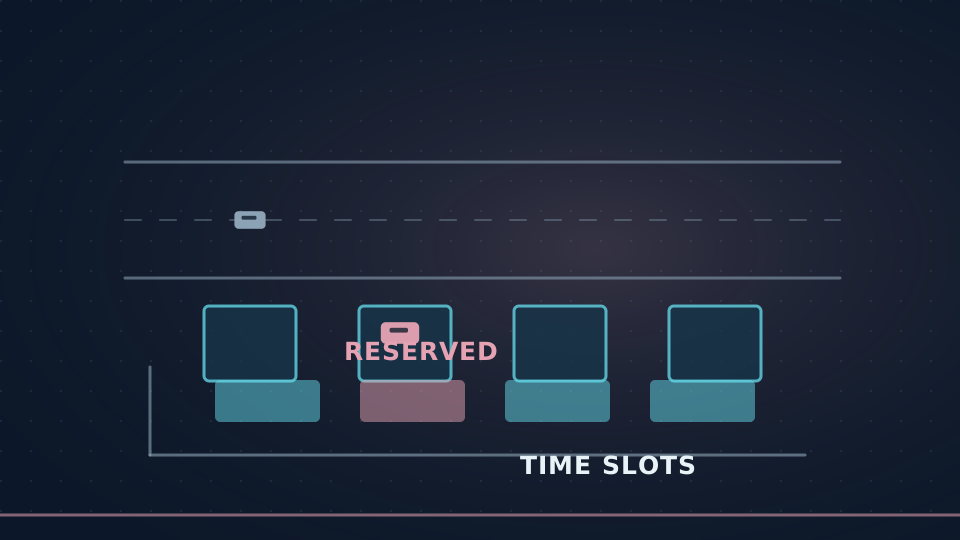
License-plate rationing limits when a car may be driven, hoping to relieve congestion by removing some vehicles from the road. But travelers differ in their time values and their ability to adapt. A restriction that looks uniform on paper may have unequal consequences and may even encourage households to buy another car.

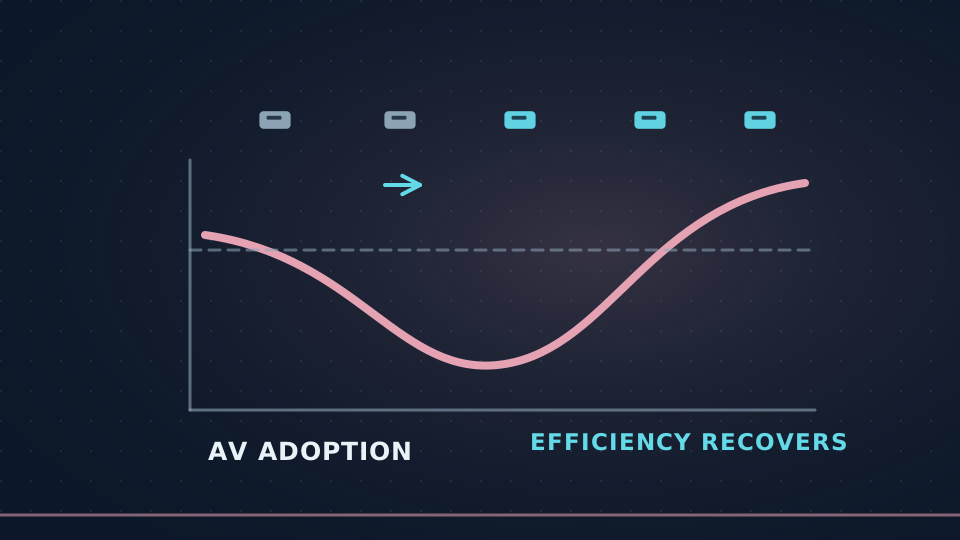
Unrestricted travel gives way to a moderate restriction and then a tighter one. The final act emphasizes the second-car response: wealthier travelers can escape the rule while others cannot. Comparing travel outcomes and social cost shows why a stricter restriction need not improve welfare. This is the central policy warning in the model: reducing legal access to a particular vehicle is not the same as efficiently allocating scarce road space. Behavioral adaptation and unequal resources can weaken the congestion benefit and shift its burden toward travelers with fewer options. The demonstration is an illustrative realization of the paper's mechanism, not a forecast for every city.