VISUAL ESSAY / FREIGHT & LOGISTICS

Cooperative Truck Platooning

FILM INDEX / JUMP TO AN ACT
FIELD GUIDE

Finding the Fuel-Saving Formation

Trucks traveling close together can reduce aerodynamic drag and fuel use, especially for vehicles behind the leader. The problem is that real trucks have different origins, destinations, and schedules, so a beneficial platoon does not form simply because several trucks use the same highway.

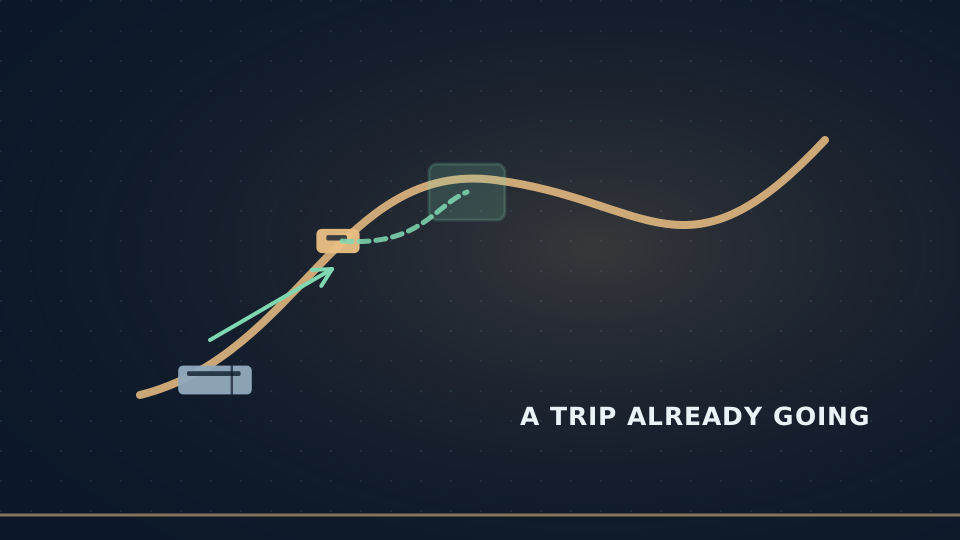
The opening comparison isolates the energy advantage of close following. The long-corridor scenes then show trucks entering and leaving through different ramps. With independent itineraries, most travel alone; with limited timing and route coordination, compatible trucks join temporarily, separate at their exits, and sometimes meet other groups. The cumulative energy comparison captures savings across whole trips rather than a single formation. This matters because platooning benefits must be weighed against any extra distance or waiting required to meet. The paper's core planning insight is to coordinate itineraries only where the energy saved while traveling together justifies the adjustment.