VISUAL ESSAY / PUBLIC TRANSIT

Transit Stop Spacing and Headway

FILM INDEX / JUMP TO AN ACT
FIELD GUIDE

The Walk and the Wait

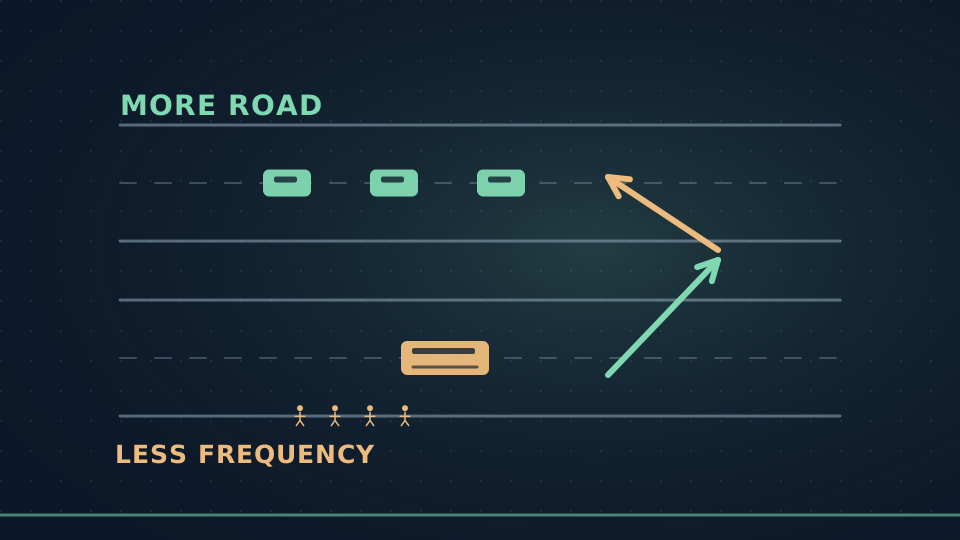
Transit design has two distances to consider: how far passengers walk between stops and how long they wait between vehicles. Closely spaced stops improve access but can slow a route, while frequent buses reduce waiting but require more service. A design that looks convenient in one dimension may be poor in another.

The introduction identifies stop spacing, vehicle headway, and the width of the area served. Three subsequent layouts compare dense stops with infrequent buses, sparse stops with frequent buses, and a more balanced arrangement. In each, passengers walk through the local street grid, wait at stops, ride, and continue toward their destinations. Running averages separate walking, waiting, and in-vehicle time. The insight is a trade-off across the entire trip. The best-looking line on a map is not necessarily the best passenger experience; access and frequency must be judged together, using the demand and operating resources available.